
A new year always makes me pay closer attention to where my money goes. Not because I’m tracking my budget, but because every dollar is a vote for the kind of world I want to live in.
And this year, I want my vote to go to the people who show up for this city in ways most of us never see. People who fight, not for attention, but for the right to feed their community with integrity. That’s why 2026 is the year to stand with the small farmers and makers who refuse to compromise the food they bring into this valley.

Jeana comes from the Zappos world, Tony Hsieh’s era, when culture wasn’t curated; it was lived. Community first. Humans first. Creativity everywhere. Bureaucracy nowhere. She absorbed the best of that environment and somehow translated it into a homesteading life. You can see it in the way she organizes neighbors into a homesteading network that actually helps people do real things: feed their families better, become more capable, and build connections in a city that often feels disconnected.
And every couple of weeks, I’ll see a post of Jeana standing beside a friend, a customer, or a neighbor, each one beaming, holding a dozen of her fresh eggs as if they’ve just won something meaningful. It’s ridiculously fun to watch people get “eggcited†over eggs, but that joy says everything. People light up because the food has a face, a story, a place, and a family behind it.
She didn’t leave Zappos and reinvent herself; she carried forward the parts of that world that mattered and built something new with them, something grounded, local, and deeply, emotionally, human.
The Rehms’ homestead now includes their newly approved farm stand in front of their house—a tiny structure with a big story behind it. What most people never see is everything that happens before an egg ever reaches that stand. The 6 a.m. feedings in the cold. The bales of hay that have to be hauled, no matter how tired everyone is from their day jobs. The sick hens, the water lines that crack in the summer heat, the gardens that wilt and revive because someone refused to give up on them. The hundreds of hours of red tape paperwork and thousands in fees make you wonder if the system was designed to keep small farms out entirely. None of that shows up in the price tag. A $10 carton of eggs doesn’t tell you about the nights they come home exhausted and still have animals depending on them, or the weekends spent rebuilding coops instead of resting. The work is constant, often inconvenient, and absolutely chosen. And that choice is what gives the food its worth.
They named their place Semper Fi Homestead, a commitment to God, to their fellow brothers and sisters, and to the kind of family that shows up even when the work is heavy. That commitment includes their two teenage boys, who have embraced the homesteading life fully. They aren’t bystanders; they carry a large share of the daily responsibilities. They haul feed, tend animals, fix what breaks, and carry themselves with a steadiness most people wouldn’t expect from teenagers.
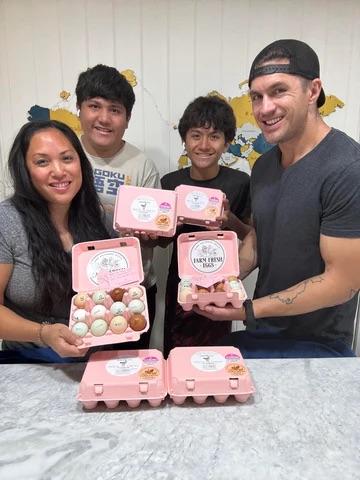
The boys’ newest project is microgreens, and they approach it the way their parents approach everything on the homestead: with care, curiosity, and the belief that food becomes meaningful when your hands are part of the process.
Scott’s history explains the rest. He is a disabled vet who served in the Marines as a gunner, and even with PTSD, Scott wanted to continue serving. During the height of COVID, he moved from hospital to hospital as a traveling nurse, walking into rooms most people prayed to avoid. He carries that experience quietly, but you can feel the weight of it in the way he shows up for people who are hurting.
Their four Frenchie therapy dogs were his way of giving veterans a place to soften when the world felt too sharp. And now there’s Johnny Cash, the 20-month-old fluffy HighPark mini steer who stands beside visitors like a four-legged sanctuary. Visitors lean into him, breathe with him, let his warmth settle their nervous systems in ways human conversation can’t always reach. None of this is staged for social media. This is simply the life they’ve built: when someone needs steadiness, they offer it. When someone needs space, they create it.
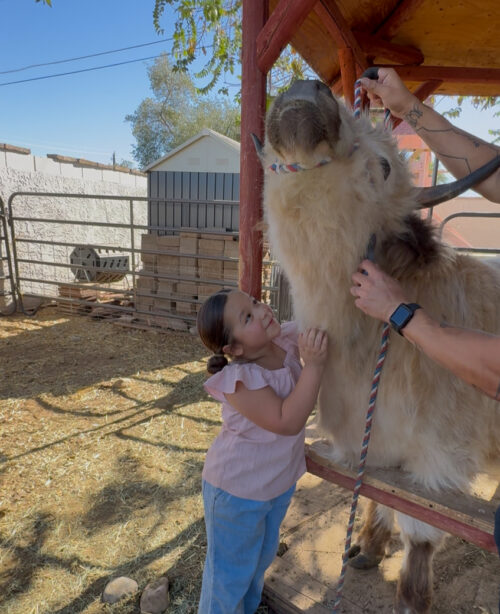 Those moments come to life on their half-acre, yes, just a half-acre, where they pack an astonishing amount of healing into that square footage. Visits are by appointment on Saturdays for a small donation, and people come for the animals as much as the peace they bring. Holy, the seven-month-old Dexter, who will one day be their milk cow. Big Papa, the 42-year-old sulcata tortoise, moves slowly but somehow sets the tone for the entire place. Mr. Butterball, the blue slate turkey scanning the yard like he’s on patrol. Hennifer Lopez, the fabulous black copper Maran, which lays eggs the color of dark chocolate. Guile, the Polish rooster with the feathered mohawk, announces himself before you even get out of the car.
Jeana, Scott, and their boys didn’t stop at their own gate. The family built a place where other people could learn the skills they were never taught, how to bake sourdough, butcher a bird, make candles, grow herbs, render tallow, or find a farmer whose practices they can trust. Her Facebook community, “Las Vegas Anything Homesteading,†has grown to more than 700 people, all trading knowledge, tools, and small victories. She shares where to buy truly pasture-raised chicken (Josh & Sons), where to source quality beef (Battle Born Ranch), and which Nevada makers are doing things the right way. What she’s created isn’t a hobby group; it’s a living network of self-reliance and mutual support. People come in curious and leave more capable, and that capability strengthens households, neighborhoods, and slowly, the local food system itself.
And then there’s the food. Food has become expensive everywhere. Nothing feels like a bargain anymore. So the question stops being, “Why are farm eggs ten dollars?†and becomes, “What am I actually buying when I spend money on food?†When I buy from Nevada’s small farmers, I’m not buying convenience or perfection. I’m buying food raised by people who refuse to cut corners. I’m buying eggs from hens that sunbathe with tortoises and wander with turkeys. I’m buying meat from farmers who move their birds across fresh pasture instead of locking them under fluorescent lights. I’m buying the work, the early mornings, the care, the losses, the learning, the integrity that shows up on the plate. Price is the surface. Worth lives underneath.
Part of standing with the people who feed you is recognizing the faith behind their work—the belief that small things matter, that service matters, and that feeding a community is holy in its own way. The Rehms don’t separate their homestead from their faith; it’s the foundation that steadies them when the work is heavy and the days are long. You can feel it when you walk their property. Johnny Cash meets people exactly where they are, easing himself beside them with a kind of wordless understanding.
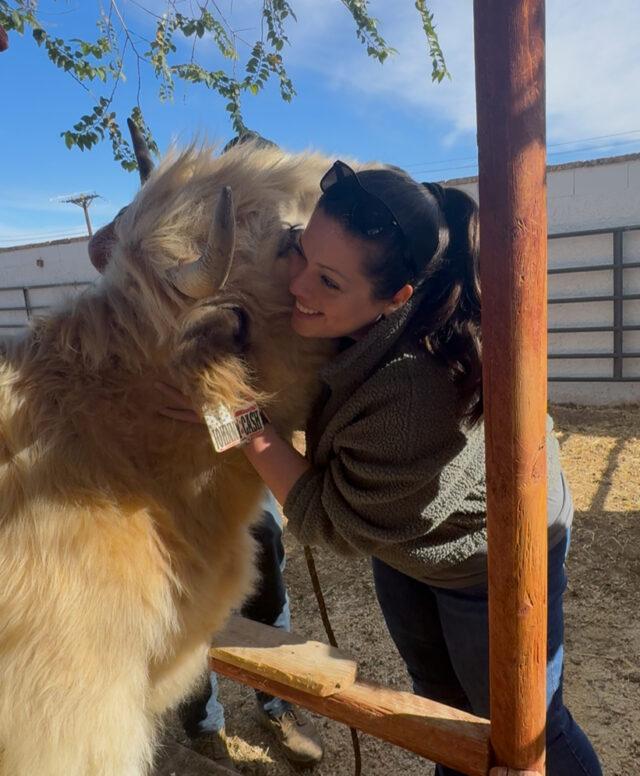
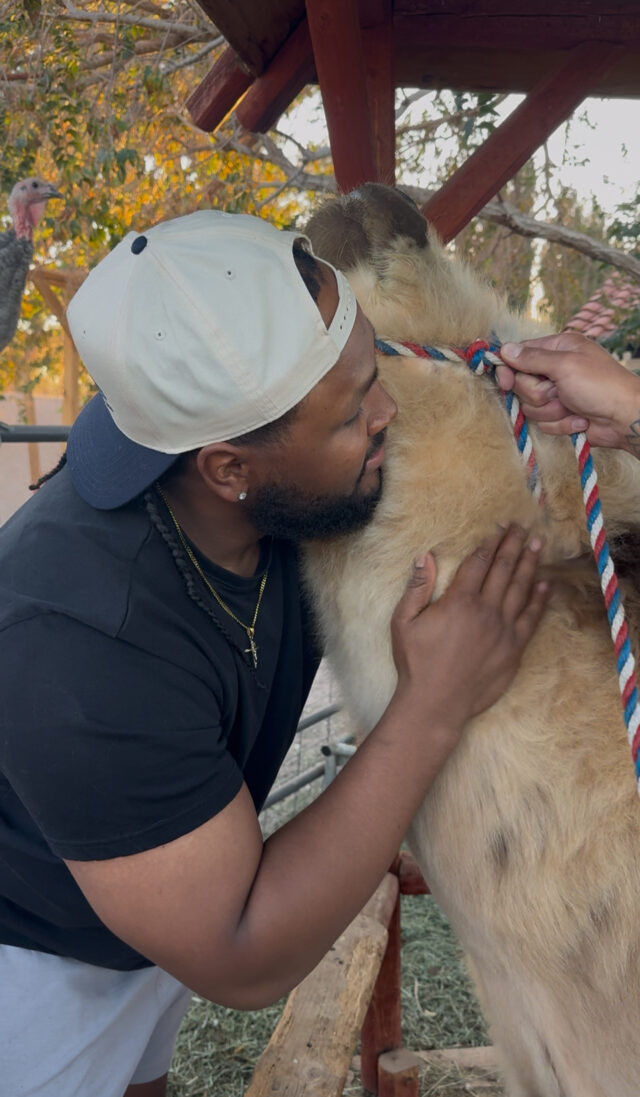
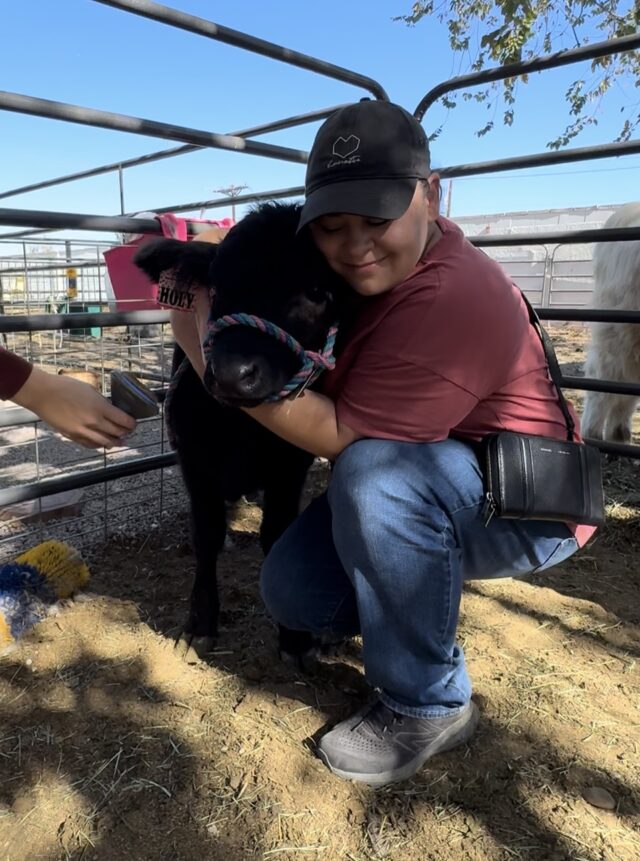
When they bring their crew to the Farmer’s Market once a month, people linger not just out of curiosity, but because the air around them feels different, quiet, kind, grounded. And when the day winds down, a softness settles across the animals. There’s a peace to it, a quiet spirituality you can sense simply by standing among living creatures who feel loved and cared for.
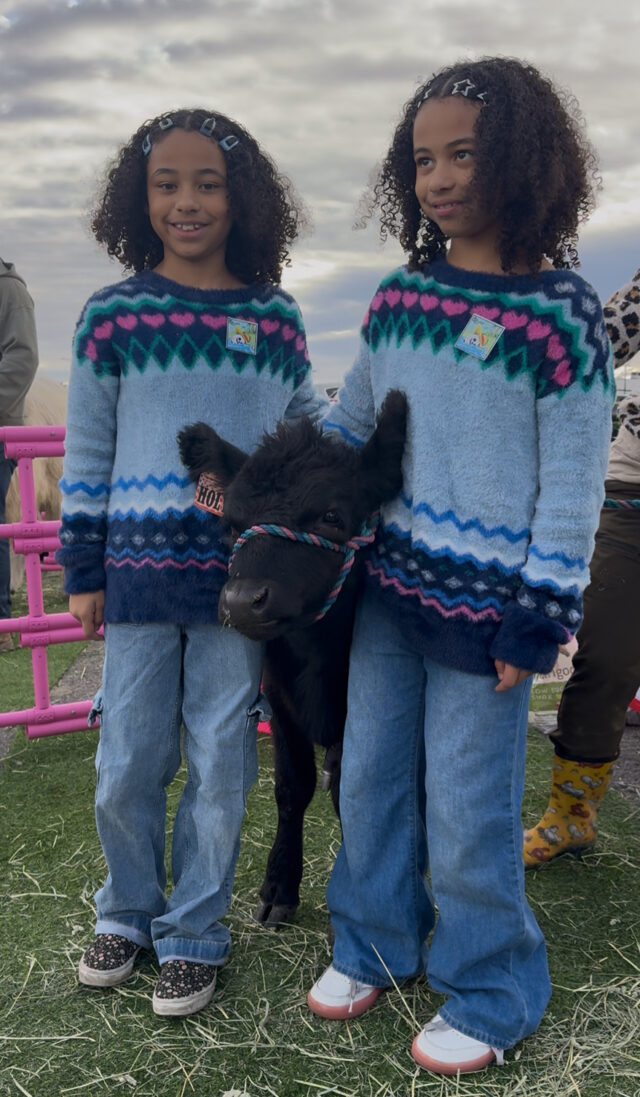
Jeana says it plainly: everything they’ve built is because Jesus placed it on their hearts and trusted them to carry it forward. Some experiences fill your stomach. Some strengthen your spirit. Their homestead manages to do both.
If last year has taught me anything, it’s that the people who feed us aren’t just selling food, they’re holding a line. They’re choosing integrity in a system that rewards shortcuts, choosing community in a culture that prioritizes convenience, choosing faith when the work stretches them past their limits.
And we get to choose, too.
Not in grand gestures, but in steady decisions that honor the people doing the work. Start wherever you are. Pick one thing. Maybe it’s buying farm-grown microgreens at the farmer’s market once a month. Or swing by Semper Fi Homestead every so often for a dozen fresh eggs. Let your dollars support the hands you trust and the food system you want to see grow.
They’ve taken their stand.
Now it’s our turn to stand with them.
You can find the Rehms at their website, as well as on Instagram, TikTok and Facebook, and their Homestead Facebook Group: Las Vegas ANYTHING HOMESTEADING


Originally published in the print edition of Vegas Wellness Magazine.
Flip through the January 2026 issue here and check the article out at the Vegas Wellness blog!


