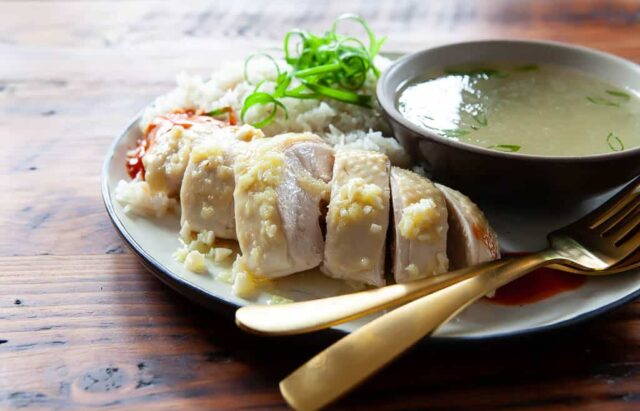
There’s nothing like Hainanese Chicken Rice. If you’re familiar with this absolute comfort dish, you know it’s basically the greatest thing next to a big hug. (Chicken noodle soup has nothing on this dish!)
Hainanese Chicken Rice is a staple of Hainan cooking, one that has inspired similar dishes throughout all of southern China. It’s a simple dish that’s made up of, well… chicken and rice! But its bold chicken flavor is what makes it stand out, even when compared to more complex meals.
While the cooking process for this dish isn’t very difficult, there are 2 simple steps to make this dish extraordinary. We’re gonna tell you what they are and how to cook the very best Hainan Chicken Rice.
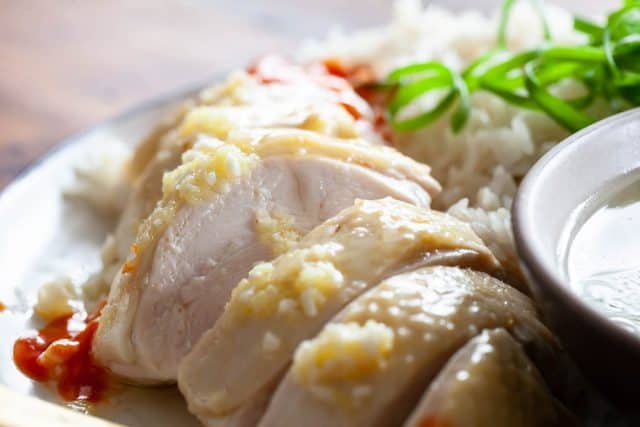
Today You’ll Learn:
- How to choose the right chicken for your Hainanese Chicken Rice
- Why you need to exfoliate the chicken
- How to cook the perfect chicken that is juicy, moist & tender
- How to get your Hainanese rice flavorful & fluffy
- And finally, how to prepare a spicy, savory chili dipping sauce and a gingery-garlic sauce
For those of you who have never tried it, let’s start at the beginning.
What is Hainanese Chicken Rice?
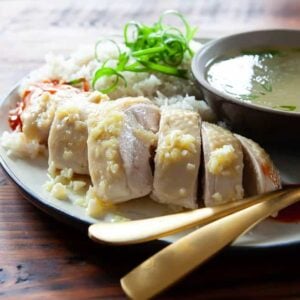
This delicious little dish consists of poached chicken and seasoned rice, usually served with a chili sauce with some cucumber slices for garnish. In essence, it’s one of the simpler chicken and rice dishes out there, but this dish is anything but plain. Poaching the chicken in a flavorful broth of ginger, garlic, and green onions gives it SO much flavor. Once the chicken is done, the rice is then cooked in the poached chicken broth, infusing it with savory chicken flavor.
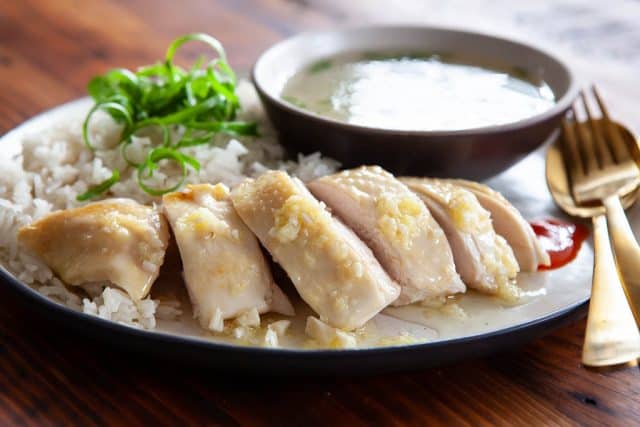
Where Does Hainanese Chicken Rice Come From?
Hainanese chicken rice derives from early Chinese immigrants of Southern China, in the Hainan province, and is adapted from a similar Hainan dish called Wenchang chicken. Hainanese chicken rice is widely considered the national dish of Singapore, and is available in many a hawker center and food court throughout the country. Variations of this dish have made their way throughout Southeast Asian countries in general, including Malaysia and Thailand.
What’s really interesting is the prevalence of chicken and rice dishes throughout the world, like Latin American arroz con pollo, Japanese oyakodon, Pakistani/Indian chicken biryani, and West African jollof rice, among others. Chicken and rice is truly a global comfort food.
The Secret Behind Making the Perfect Rice for this Dish
The rice in Hainanese chicken rice might be what makes this dish so comforting, and if you lean in reaaaal close, I’ll tell you secret to why that is: poaching liquid. As any good cook will tell you, when you cook rice with the chicken poaching broth, that infuses the rice with a bold flavor AND adds a little excess fat to your rice, which makes it nice and fluffy!
There are a number of methods people swear by for this dish. Some people cure their rice for 24 hours. While others fry their rice in rendered chicken fat before they cook it in the broth, and that works too! Personally, I like to use sesame oil. Just remember, the best chicken and rice dish is the one you enjoy making. You don’t have to jump through hoops for a good, comforting meal.
The Secret to Making the Best Hainanese Chicken: EXFOLIATE!
For this recipe, I’m using an organic supermarket chicken because, well, here’s the deal about the chicken: you gotta buy the best. Hainanese Chicken Rice dish is all about the pure taste of your chicken, so you really want to go with organic. Trust me on this. It’s worth the money for your health, the environment, and for your taste buds.
When you buy a whole chicken and are cooking it skin-on, and ESPECIALLY if you’re steaming or poaching the chicken, you want to make sure you get the “nasties” off.
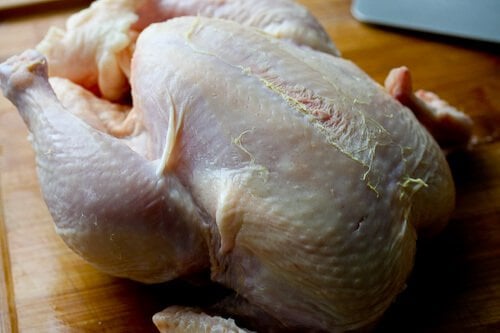
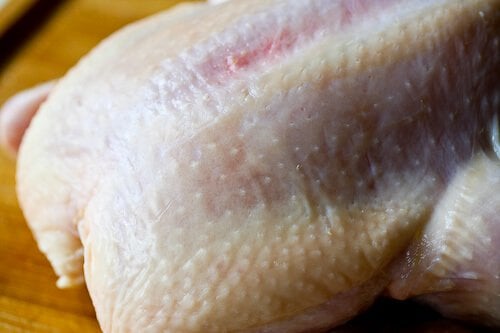
I’m sure by looking at this photo you know what I mean. What I’m after is smooth, clean, unblemished skin.
So I give my guy a facial.
Yes, I’m totally serious!
I exfoliate my chicken.
Exfoliate Your Chicken
How to give your chicken a spa treatment: Start with a small handful of kosher salt. Regular table salt is too fine to use for exfoliation. Sea salt is too expensive. Just use kosher salt. Even if you don’t have that loose skin on your chicken, it doesn’t mean you don’t need to exfoliate. There’s still hidden gunk and yuck that’s trapped in that chicken skin. TRUST ME. Your chicken will look and taste better this way.
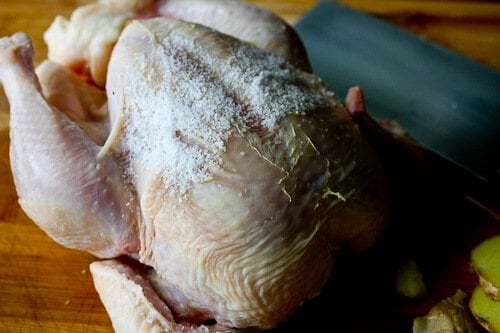
Now RUB RUB RUB!!
Be gone wrinkles!
Be gone trapped gunk!
Be gone dead skin!
Work those pores!
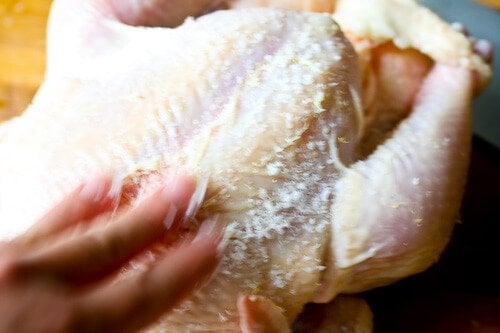
Rinse, pat dry and ta-da!!!
Glistening.
Glowing.
Soft.
Smooth.
Taut.
Chicken.
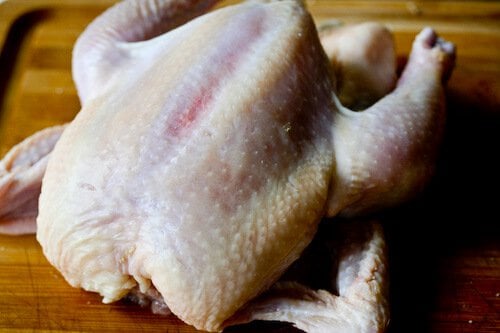
Check out those lovely pores.
Ingredients You’ll Need to Make Hainanese Chicken Rice
This is my family recipe for Hainanese Chicken Rice and I’ll show you step by step instructions in both text AND video. It’s a multi-step recipe, with 5 components:
- Chicken
- Soup
- Rice
- Garlic Ginger Sauce
- Red Chili Sauce
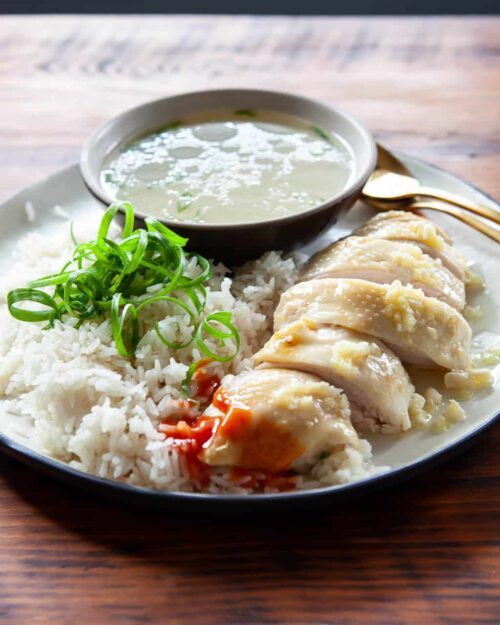
How To Make Hainanese Chicken Rice Recipe – Step By Step
Cook the Chicken
- Boil a large pot of water, and exfoliate your chicken while it’s heating up. Rinse the chicken well, inside and outside.
- When water is at a hard boil, add the chicken to pre-boil it. Let it return to a hard boil and allow the scum to come to the surface. Boil for 5 minutes. Throw out the scummy water.
- Refill pot with enough water to cover the chicken by 1-inch, and add in the garlic, green onion and ginger. Bring the pot to a boil over high heat, then immediately set to low heat to keep a simmer. Cook for about 30 minutes more (less if you’re using a smaller chicken). Check for doneness by sticking a chopstick into the flesh under the leg and see if the juices run clear or insert a thermometer into the thickest part of the thigh not touching bone. It should read 160F. The chicken will continue to cook to 165F during rest.
- When the chicken is cooked through, turn off the heat and remove the pot from the burner. Immediately lift and transfer the chicken into a bath of cold water to cool. The quick cooling will stop the cooking process, keeping the meat soft and tender, and giving the skin a lovely firm texture. After cooling, pat the chicken dry with paper towels and rub the sesame oil all over the chicken. This will help prevent the chicken from drying out.
Season the Soup
- Discard the garlic, ginger and green onion. Season the soup with salt to taste.
Cook the Rice
- Place rice into a large bowl, and fill with water. Use your hands to swish the water around, cleaning the rice. Tilt bowl to discard water, keeping the rice in the bowl Repeat 3 more times, until water is less cloudy.
- In a wok or pot, heat 2 tablespoons of cooking oil over medium-high heat. When hot, add the ginger, shallots and the garlic and fry until your kitchen smells like heaven. Be careful not to burn the aromatics! Add in your drained rice and stir to coat, cook for an additional minute. Add the sesame oil, mix well.
- Add 2 cups of your reserved poaching broth and bring to a boil. Immediately turn the heat down to low, cover the pot and cook for 15 minutes. Remove from heat and let sit (with lid still on) for 5-10 minutes more.
- While the rice is cooking, make the sauces and carve the juicy chicken for serving.
Make Your Sauces
- To make the chili sauce: Blend your chili sauce ingredients in a blender or food processor until smooth and bright red.
- To make the ginger garlic sauce: In a small saucepan, heat the cooking oil until very hot, when you start seeing wisps of smoke. Turn off heat. Immediately add garlic and ginger and let it sizzle for a few seconds. Once it settles, stir in salt and vinegar.
Hainanese Chicken Rice Recipe Video
FAQ
What sort of chicken should I use for this dish? Chicken thigh? Chicken breast? Bone-in? Skin on?
I highly recommend using an organic chicken for this meal. I like to use a whole chicken with the skin-on, but some people like to use skin-on chicken thighs or breast as well.
What’s the best kind of rice to use?
Any kind of white rice will do. Jasmine rice is a great option if you enjoy a more fragrant rice.
What do I serve Hainanese chicken and rice with?
You can serve Hainanese chicken with cucumber slices, tomato slices, or even cilantro for garnish. You can also drizzle it with kecap manis (sweet soy sauce) for a sweet twist. Some people enjoy pairing it with bok choy or baby bok choy as well.
Can I make this in a rice cooker?
Yes, you can! Just be sure to clean your rice, and then fry it in cooking oil (or chicken fat) first. Then add it to the rice cooker with your poaching broth and aromatics, and set it to cook. Once it’s done, you can place the cooked chicken on top of the rice and set it to keep warm for 10 minutes before serving for extra fluffy rice and moist chicken.
​Ready to Make Your Own Hainanese Chicken & Rice?
Now you have all you need to make this delicious comfort meal!
Is this a new dish to your repertoire or are you well familiar with this beloved meal? Got some tips and tricks for your own Hainanese chicken? Let us know in the comments below! We love hearing from you.
More Recipes to Explore:
- Chinese Boiled Peanuts Recipe
- Chinese Spring Rolls with Chicken Recipe
- Aged Sriracha Hot Sauce Recipe
Hainanese Chicken Rice Recipe
Ingredients
FOR THE CHICKEN
- 1 whole chicken 3.5 lbs, 1.8kg, preferably organic
- 1/4 cup kosher salt for exfoliating (the salt is for cleaning the chicken, this is not consumed)
- 4 inch section of fresh ginger peeled and cut into 1/4'' slices
- 4 cloves garlic
- 2 stalks green onion cut into 1" sections (both green and white parts)
- 1 tablespoon Asian sesame oil
FOR THE RICE
- 2 tablespoons cooking oil like canola, vegetable, peanut
- 2 cloves garlic finely minced
- 1 shallot minced
- 1 inch section of ginger finely minced (or grated on microplane grater
- 2 cups long-grain uncooked rice
- 2 cups reserved chicken poaching broth
- 1/2 teaspoon sesame oil
FOR THE CHILI SAUCE
- 1 tablespoon lime juice
- 2 tablespoons reserved chicken poaching broth
- 2 teaspoons sugar
- 4 tablespoons sriracha chili sauce
- 4 cloves garlic
- 1 inch section of ginger peeled
FOR THE GINGER GARLIC SAUCE
- 4 tablespoons cooking oil canola, vegetable, grapeseed
- 2 tablespoons grated fresh ginger
- 2 cloves garlic finely minced
- 1/2 teaspoon salt
- 1 teaspoon rice or white vinegar
Instructions
COOK THE CHICKEN
- 1. Boil a large pot of water. In the meantime, clean the chicken by exfoliating with kosher or coarse salt. Rinse chicken well, inside and outside.
- 2. PRE-BOIL CHICKEN: When water is at a hard boil, add the chicken. Return to hard boil, let scum come to the surface. Boil for 5 minutes. Discard all the water, including the scum.
- 3. Refill pot with clean water to cover the chicken by 1-inch, and add in the garlic, green onion and ginger. Bring the pot to a boil over high heat, then immediately turn the heat to low to keep a simmer. Cook for about 30 minutes more (less if you're using a smaller chicken). Check for doneness by sticking a chopstick into the flesh under the leg and see if the juices run clear or insert a thermometer into the thickest part of the thigh not touching bone. It should read 160F. The chicken will continue to cook to 165F during rest.
- 4. When the chicken is cooked through, turn off the heat and remove the pot from the burner. Immediately lift and transfer the chicken into a bath of ice water to cool. The quick cooling will stop the cooking process, keeping the meat soft and tender, and giving the skin a lovely firm texture. After cooling, pat the chicken dry with paper towels and rub the sesame oil all over the chicken. This will help prevent the chicken from drying out.
SEASON SOUP
- Discard the garlic, ginger and green onion. Season the soup with salt to taste.
COOK THE RICE
- 1. Place rice into a large bowl, and fill with water. Use your hands to swish the water around, cleaning the rice. Tilt bowl to discard water, keeping the rice in the bowl Repeat 3 more times, until water is less cloudy.
- 2. In a wok or pot, heat 2 tablespoons of cooking oil over medium-high heat. When hot, add the ginger, shallots and the garlic and fry until your kitchen smells like heaven. Be careful not to burn the aromatics! Add in your drained rice and stir to coat, cook for an additional minute. Add the sesame oil, mix well.
- 3. Add 2 cups of your reserved poaching broth and bring to a boil. Immediately turn the heat down to low, cover the pot and cook for 15 minutes. Remove from heat and let sit (with lid still on) for 5-10 minutes more.
- While the rice is cooking, make the sauces and carve the chicken for serving.
MAKE SAUCES
- To make the chili sauce: Blend your chili sauce ingredients in a blender until smooth and bright red.
- To make the ginger garlic sauce: In a small saucepan, heat the cooking oil until very hot, when you start seeing wisps of smoke. Turn off heat. Immediately add garlic and ginger and let it sizzle for a few seconds. Once it settles, stir in salt and vinegar.